Historical Background
The discovery of the tomb of the apostle St james was one of the most important events of the middle Ages. The great pilgrimages to Compostela brought together, and had a vital influence on, a number of different aspects of society: art, religion, and economic and cultural life. Compostela was together with Rome and Jerusalem, one of the three great centres of pilgrimage of the Christian worls.
Gotescalco, bishop of Le Puy, is one of the earliest pilgrims of whom we have any record. He went to Compostela in the year 950, at the head of a vast retinue. Among the vast number of pilgrims we frequently find distinguished travellers: bishops, kings, magnates, the rich and the saints. Among the pilgrims were those who began their journeys out of real devotion, others who went as the delegates of cities, towns and individuals -and neither was there any lack of those who took the Way of St James in the fulfilment of a judicial punishment.
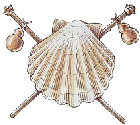
Pilgrims generally travelled in groups for mutual protection. Broad hats protect them from the sun, the cloak to counter cold and rain, the satchel for food, the gourd for water and the staff for defence and support over rough ground.
|